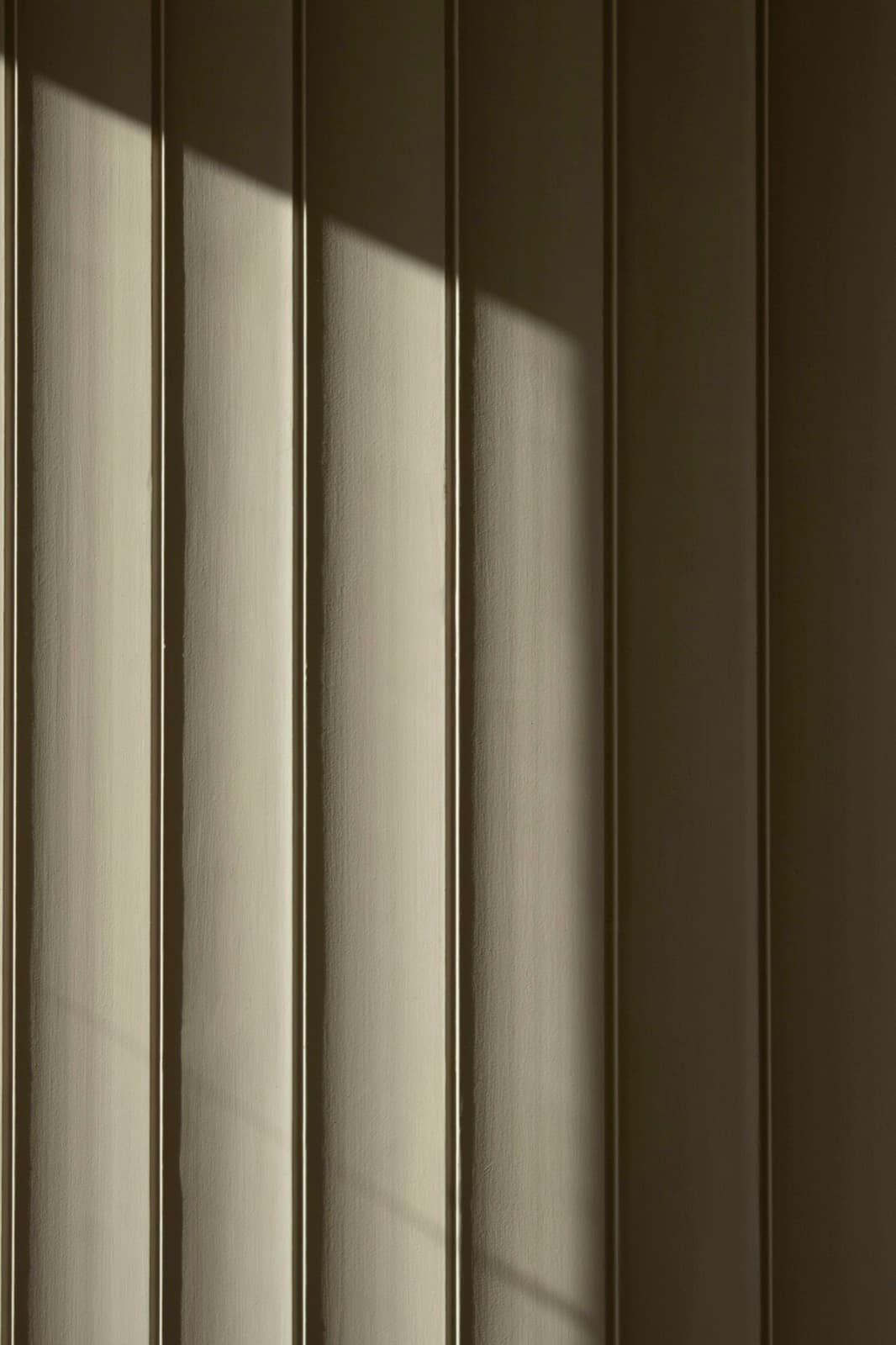
Of all the materials we work with, light is the one clients ask about least and that shapes their experience of a building the most. A room's proportions can be perfect on paper and still feel wrong if the light arrives at the wrong hour, from the wrong angle, at the wrong intensity.
We tend to design light in layers rather than as a single decision. There's the structural layer — orientation, window placement, depth of reveal — that determines how much light enters and when. Then there's the filtering layer — screens, louvres, overhangs — that softens and shapes it. Only after both of those are resolved do we think about artificial light at all.
The rooms people remember are rarely the brightest ones. They're the ones where light does something — falls across a wall at a particular hour, pools in a corner, changes the mood of a space over the course of a day. That's not something you can specify in a lighting schedule. It has to be designed into the section from the beginning.