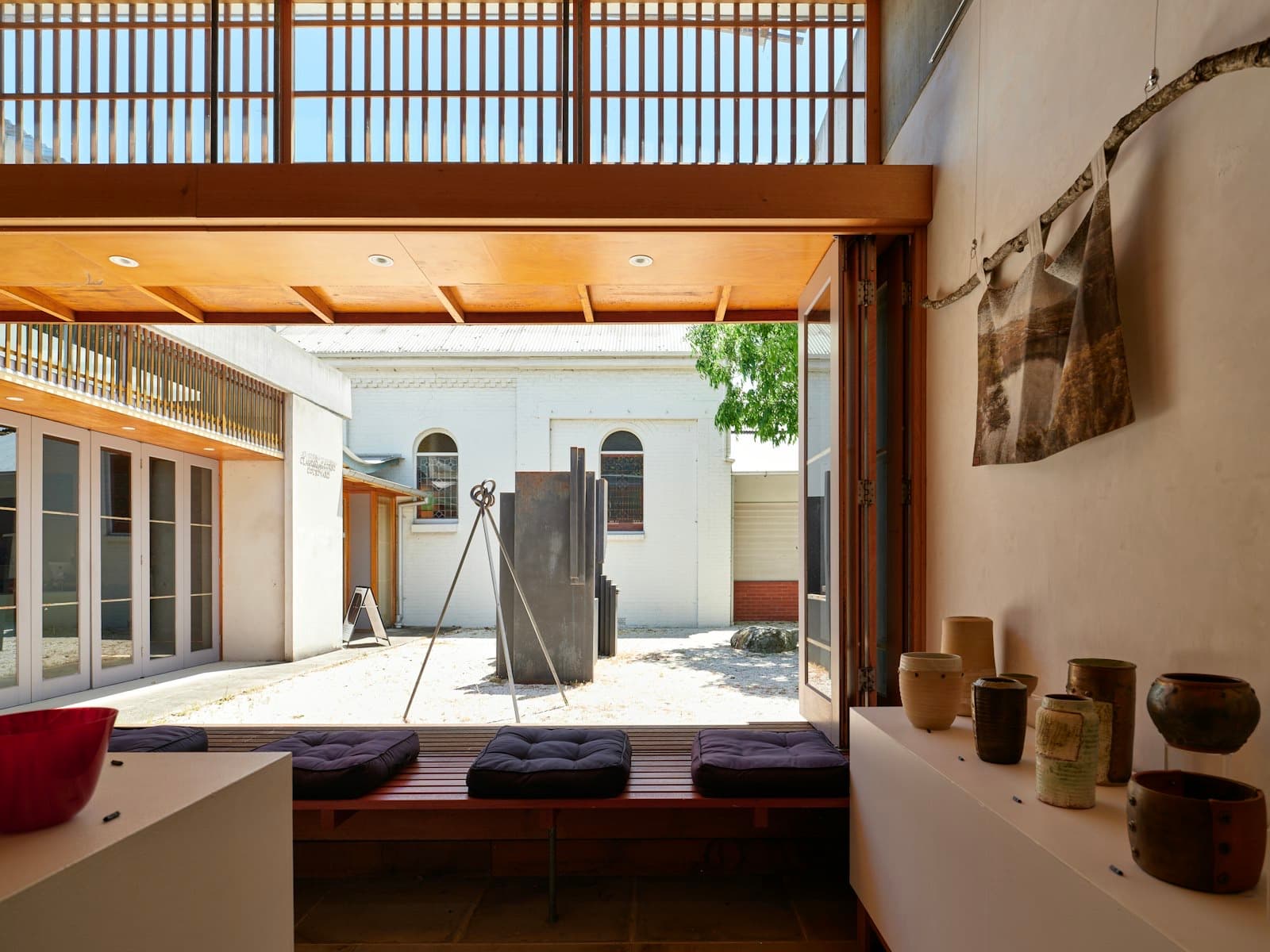
Most of the built environment is optimised for speed — for getting people from one place to another as efficiently as possible. There's a place for that. But some of the spaces we remember most clearly are the ones that ask us to slow down: a threshold that takes an extra few seconds to pass through, a courtyard that interrupts a straight line, a window seat that has no obvious purpose beyond sitting in it.
We think of these as deliberate frictions — small interruptions in the plan that create a pause. They're not inefficiencies; they're where a lot of the emotional content of a building lives. A house that gets you from the front door to the kitchen in the shortest possible path is efficient. A house that takes you past a view, a change in material, or a shift in light on the way is memorable.
This isn't an argument for making buildings deliberately inconvenient. It's an argument for being intentional about where speed serves the people who'll live in a space, and where a moment of slowness serves them better.